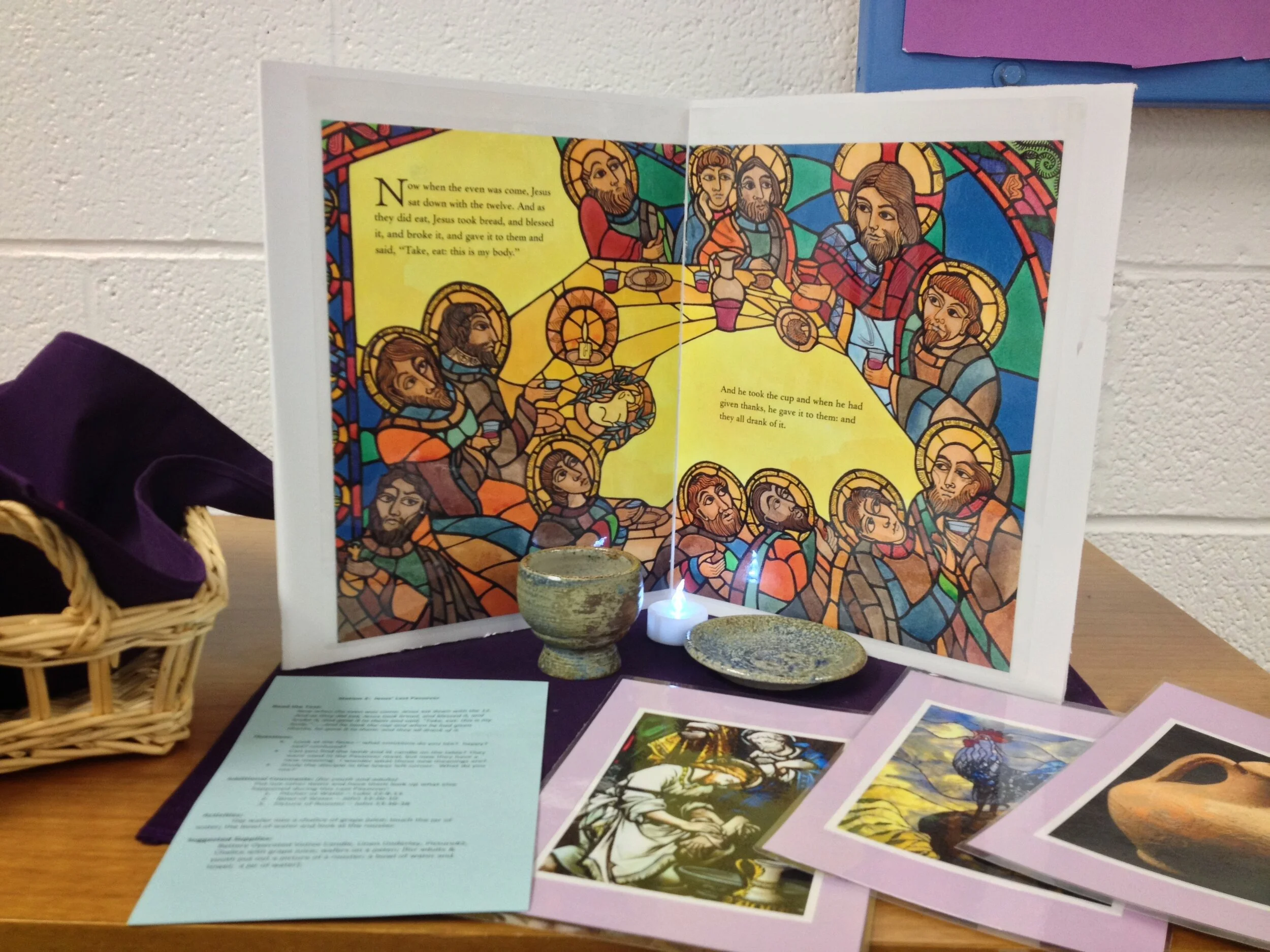
Stations of the Cross Two Ways!
Check out the Stations of the Cross from the Courtyard!
Check out the Children’s Stations of the Cross!
We have set up a Stations of the Cross display around the parish hall that can be viewed from the courtyard. It is also available online here.
Kids have read the text, Rev. Ellie’s son videorecorded the images and Deborah provided background music in order to make it a multisensory experience. This is another way for parishioners of any age to observe Good Friday for any of our parishioners.

New StoryWalk! Love the Earth Themed Church School Event
Enjoy reading the book outside while appreciating your surroundings!
New StoryWalk!
A New StoryWalk begins in April. The book by Julian Lennon (ask your parents about his father and the Beatles) is called Love the Earth. Enjoy reading the book as you walk the church grounds. Check it out!

Creation Care News
MA Bishops declare a Climate Emergency!
On March 23, 2021 the Massachusetts Bishops declared a Climate Emergency, joining many Anglicans and other denominations that have already done so. You can read their full declaration and the four areas of engagement advocated here. Their statement contains a lot of guidance as well as links to helpful information and organizations. This will guide us in our efforts to make the changes that are needed in our own lives and our communities. We hope you will make time to read it. It is a timely challenge to act now, before it is too late. To summarize, they ask us to Pray, Learn, Act, and Advocate for a sustainable climate.
Good Shepherd Film Series
Following the Bishops’ recommendations and in the spirit of Earth Day April 22, , we are joining with Interfaith Power and Light in using the movie Kiss the Ground to learn about our planet’s soil. See our earlier announcement for a more detailed description of the movie.
Resources: www.interfaithpowerandlight.org . Click on “Get Involved” and then “Upcoming Events” which will take you to “Faith Climate Action Week”. This gives you the opportunity to view the movie for free between April 10-26 and provides other resources. Otherwise the movie is available on Netflix.
We encourage you to watch Kiss the Ground and to join us to discuss it on Sunday April 11 from 7:00 to-8:15 pm, via zoom.

The Rev. Eleanor Applewhite Terry Sermon
Sermon for 3 Lent B; March 14 2021
Sermon for Palm Sunday; March 28, 2021
Jesus, when you rode into Jerusalem the people waved palms with shouts of acclamation. Grant that when the shouting dies, we may still walk beside you, even to a cross. Amen (New Zealand Prayer Book, Collect, p. 580)
Often, when I read Scripture in my own devotions, I imagine myself one of the characters, walking beside Jesus hearing and learning from his teachings as if they were spoken specifically for me. It is a spiritual practice I find very meaningful.
But today, on Palm Sunday, I find myself resistant to entering this part of God’s story. The Passion Gospel we hear this morning is as difficult and painful as it is familiar. And, truth be told, I would rather not identify with the participants in today’s Scripture.
I don’t want to be Peter in this story. I’d rather not imagine myself the one to whom Jesus comes in the Garden of Gethsemane and finds asleep. I don’t want to bear the burden of hearing Jesus say to me, “I am deeply grieved, even to death; remain here, and keep awake.” I don’t want the responsibility of being the confidante of Christ in his hour of need. I don’t want to be Peter in the Passion story because I know he will deny Christ three times. And I’d rather not be that person.
I don’t want to be Judas either. No one wants to identify with him. He’s the traitor after all. The bad guy who betrays Jesus with a kiss.
I don’t want to be Pontius Pilate or the High Priest. They are the ones with the authority to decide Jesus’ fate. I don’t want to be the Priest who heard Jesus declare that he is the Messiah, the Son of the Blessed One and then accuses Jesus of blasphemy. I don’t want to be Pilate who hears the testimony against Jesus and must decide whether to free him or have him killed. I don’t want to be in the position of being able to release Jesus, only to be driven by the crowd to execute him instead. It would not be good to be Pilate.
And I certainly don’t want to be Jesus. Not today. It’s too overwhelming to even try and identify with Christ at the moment of his Passion. I don’t want to know the despair and the sorrow that Jesus feels the night he pray in the garden. I’d rather not know what it is to cry from the cross, “My God, my God, why have you forsaken me?”
No. I would just assume look at the Passion from a safe, unimpassioned distance. But today is Palm Sunday, and we can’t do that. Today is the day in which we all are forced to play a part in the Passion of our Lord. -The day when we have to struggle with the uncomfortable reality that we do have a role in the story we tell today.
As much as we might be temped to- today is a day when we should not put roses on the cross to make it easier to accept. We cannot gloss over the events of the Passion and jump straight to the Alleluias of Easter without spending time living the story for ourselves. We cannot leave it to others to play our part in the Passion.
We may not want to admit it, and we may not like it, but we all are a little bit like Peter, who sleeps and denies rather than ministers and proclaims.
We all are a little bit like Pilate and the High Priest, in that we share in the conviction that sentenced Christ.
We are all a little bit like Jesus, in those moments when we find ourselves lost and alone in our faith. -When our fear leaves us feeling abandoned, even by God.
And we are very much like the crowd, the passersby, who gather around Jesus and experience a range of conflicting emotions as they hail the arrival of the Messiah, waving palms as he enters Jerusalem, and then turn around and call for his crucifixion.
I have heard it suggested that every Christian, throughout the ages, is present at the foot of the cross. In that moment of sacrifice, we are united in our grief, in our complicity, and in our salvation. So, too, we all find ourselves in the throng that greeted Jesus as he arrived in Jerusalem.
We are part of that crowd that waves the branches of palm. All glory, laud and honor to our redeemer King. And then, within minutes, we who are members of that crowd outside of Jerusalem find ourselves members of another vastly different crowd, shouting for the death of the Messiah.
It’s an emotional roller coaster we ride every Palm Sunday. We are on a twisted path, privileged to shout and proclaim our faith in Jesus one minute, and calling out for his death the next.
Palm Sunday forces us to confront that juxtaposition- as uncomfortable and challenging as it is. It is a day which forces us to admit that we can and should identify with the people in this story. Because the Passion is more than a story. It is the record of one of the most emotionally powerful episodes of our collective faith. It is part of the history of God’s life with us. And we are part of the narrative. We participate in the events we commemorate, capable of praising Christ in one moment and forsaking him the next.
I am sure I am not alone in having friends (and family) who have chosen not to be part of a church. Many of those I know stay away because they see churches filled with hypocritical folk who say they believe in God but then don’t lead particularly faithful lives. Why bother being Christian if they’re no better than the rest of us, one friend asked me.
She was a bit surprised at my response when I agreed that we church folk are no better than the rest. And that’s just the point. We don’t follow Jesus because we are not sinners, but because we are. We live out our lives of faith doing the best we can, but knowing that we are perfectly capable of praising Christ one minute and forsaking him the next. We know we can be invited to stand by Christ’s side in his time of need and instead be found asleep. To be a Christian does not mean to be perfect. To be a Christian is to be convicted by the roles we play in today’s Gospel. To be a Christian is to be reminded by our liturgy today how easy it is to forsake the God who died for us, at the same time we proclaim him as our Messiah.
Saint Paul writes that “God proves his love for us in that while we were still sinners, Christ died for us.” (Romans 5:8). Throughout this Holy Week, we will be reminded of the sins and faithlessness which contributed to the death of Christ. But, as we all know, the story does not end today. It does not end with the cry of Jesus from the cross, or with our guilt for the roles we play in his Passion. The story, in fact, is just beginning. And one week from today, we will rejoice again. Thanks be to God. Amen.

BIOBLITZ 2021
Bioblitz 2021
What if You Could Change the World Just by Taking a Picture?
Join the Acton Boxborough BIOBLITZ
April 30-May 3.
Nature is in trouble. The climate is changing, landscapes are shifting, and species are disappearing, while we gaze at our monitors, hunch over our phones, and ignore the world around us.
But what if our cameras could help us pay attention to nature and teach us about that bird in our backyard, or that flower by the woods? What if our social networks included oaks, salamanders, and robins, as well as all our friends?
Join the Acton-Boxborough BIOBLITZ
A bioblitz is a communal citizen-science effort to record with your iphone or android as many species (plants, animals, insects etc) within a designated location and time period. iNaturalist makes this all possible.
Bioblitzes are great ways to connect to the environment while generating useful data for scientists. They are also alot of fun. Join the fun and help change the world with family, friends, neighbors, houses of worship, and students. Click on this link to download the flier.

The Rev. Eleanor Applewhite Terry
Sermon for 3 Lent B; March 14 2021
Sermon for 5 Lent B; March 21, 2021
Good Shepherd, Acton
May the words of my mouth, and the meditation of all our hearts, be acceptable in your sight, O God, our Strength and our Redeemer. Amen.
My kids once got into a debate about whether J-walking really is illegal. One of them argued it was dangerous- and that’s why you shouldn’t do it- especially in Boston, she noted. Her sister didn’t see it as a big deal either way. And my third was most concerned about what the fine would be if you were caught.
My husband and I humored them for a while and then jumped in to make the parental point that just because you might not get a ticket for something doesn’t mean you should get away with doing something dangerous or wrong. This applies to all sorts of things. There may not be a specific ordinance against skate boarding along the edge of our deck, or walking across a frozen pond in 40-degree weather, but that doesn’t mean it’s a smart thing to do. And there are lots of things that are right to do that don’t have laws to enforce them, like holding the door for someone, saying please and thank you. And not using your cell phone in church!
Those of you who have parented children know it is a long process of maturation to help our kids develop a sense of right and wrong. And rules and laws are helpful teachers because there is always the threat of punishment when they are not obeyed. Yet, eventually, hopefully, as we mature, we come to trust our own judgement more and more. Our inner moral compass guides our behavior as much as the law does. We realize that the reason to return the library book on time is so someone else can enjoy the book too— and that should motivate us as much as fear of the fine.
Much the same principle applies to God’s parenting of us. Back in the days of Moses, the people were given the Law to help them understand the moral behavior that was expected of them. God entered into a Covenant with the Israelites and gave them rules- the Ten Commandments among them- to help them govern their behavior. God attached a series of covenantal blessings and curses. If the people followed the Law and met the conditions of the Covenant established by God, they would flourish. If they strayed, they would be cursed. The Law was meant to help the people mature into right relationship with God and with one another. But that didn’t mean it was always followed. Like we do today, the rules were pushed and ignored and violated.
And for a time, that was the pattern that occurred: faithfulness and infidelity. Blessing and curse. Then Israel fell and later Judah. Jerusalem was destroyed by the Babylonians. The site of the holy Temple, the home of the Arc of the Covenant, was in ruins. The last king of Judah was overthrown, tortured and died in captivity. And it was wondered: is this God’s ultimate curse? Has God finally broken God’s end of the Covenant? Have the people been so unfaithful that God no longer desires a relationship?
And out of the midst of this chaos and the destruction of Jerusalem, the prophet Jeremiah warns the people that God’s judgment is real. Yet, in our first lesson for today, and mid-way through his long prophesy, Jeremiah’s message turns from fear to hope. He prophesies the word of the Lord: “The days are surely coming when I will make a new covenant with the house of Israel and the house of Judah. It will not be like the covenant that I made with their ancestors… a covenant that they broke.”
Instead, God will lay aside his anger, his judgment, his punishment and try again. And this time, the law will be written on their heart, rather than on stone. This time the people will not have rules about God, but will instead know God. It’s an extraordinarily generous promise. And it acknowledges God’s trust and love for God’s people. Despite their past unfaithfulness, God’s desire is for them to do the right thing— not out of fear of punishment, but because God has written the law on their heart. It is the difference between doing the right thing because you’ll get into trouble if you don’t, and maturing into knowing what is best regardless.
As we near the end of Lent, and approach the shadows of Holy Week which lie ahead, it is a comfort to be reminded of how much God loves us and desires relationship with us, in spite of ourselves.
And indeed this desire of God for relationship with humanity is seen over and over in Scripture. From the moment of Adam and Eve’s creation, when God pronounced it very good, to the call of the patriarchs and matriarchs, to the exodus from Egypt and arrival in the Promised Land, to the judgment and blessing of the prophets, and to the incarnation of Jesus and his resurrection we will celebrate on Easter, over and over again in Scripture, God goes to extraordinary lengths to establish, maintain and bless a relationship with us.
That’s the reason for the covenants in the first place, of course. The law is given not simply to provide a list of do’s and don’ts- but to help establish a relationship between us and God and between us and other people. Why are we to remember the Sabbath? -Because it is a way to honor God and draw closer to him. Why are we not to covet our neighbor’s things? -Because doing so has the potential to damage the relationship between us. Indeed, violation of God’s rules, of the Covenant or the Law, is a sin not because we fail to do what God says, but because doing so harms the relationship we have with God and with other people.
In our Lenten Adult Ed class a few weeks ago, we discussed the definition of sin found in our Prayer Book: sin, it says in the Catechism, is “the seeking of our own will instead of the will of God, thus distorting our relationship with God, with other people, and with all creation.” (BCP, p. 848). Rules and guidelines and laws are given to help us form and maintain right relationships. When we break them, we sin, because they damage the relationships God is trying to create for us and with us.
This has been a particularly difficult week for our Asian-American and LGBTQ families and friends. Recent events have exposed wounds that run deep in both communities- the dramatic increase in violence and racism toward Asians in this country since the pandemic began- and the pain borne by the LGBTQ community whenever they are wrongly judged not worthy of God’s blessing. We have a long way to go to overcome the prejudices and burdens of racism and homophobia - in the church as well as in the public square. We have strayed far from the Scriptural ideal of being in right relationship with God and loving all our neighbors. And when the pain is especially raw, as it is for our Asian and LGBTQ beloved, we might be tempted to see our own times superimposed upon those of Jeremiah’s. God distant and uninvolved- fed up with our prejudice and lack of faith. Church irrelevant at best; or part of the problem at worst. People irreverent and unwilling to reach out to know or honor those who do not look or love like them.
Yet as I read Jeremiah’s prophesy for today, it occurs to me that perhaps God makes the task of reconciliation a bit easier than we might realize. God desires relationship- perhaps more than anything else. God wants us to be in right relationship with other people and to be free of the violence and prejudice which corrupts our hearts. And there is ample evidence that God goes to great, extraordinary, miraculous lengths to help this happen.
What if it is not as hard as we think it is to know God and do God’s will? -To restore our relationship with God, other people, and all creation? What if the impediments to knowing God are our own? What if God is closer than we realize and more accessible than we imagine?
Can you hear God’s promise to us? I will put my law within you, and I will write it on your hearts; and I will be your God, and you will be my people. No longer shall you teach one another, or say to each other, ‘Know the Lord,’ for you shall all know me, from the least to the greatest’, says the Lord.
Why shouldn’t this be true? Why shouldn’t the promise of the ages, that God desires relationship with his people, not be for us as much as for Jeremiah’s unfaithful rabble? What if, unlike human love, God’s love comes easy? God’s forgiveness is eternally generous? God’s commitment unwavering?
What if this were true?
It might look like Christmas- when God becomes incarnate to show us the way. It might look like Easter, when death is no longer the end of the story. It might look like Lent, when we repent and are assured of God’s forgiveness. It might be that peacefulness that steals into our hearts every now and then. Or that comfort we discover when we know we are loved for who we authentically are. Or that feeling that encourages us when all other hope seems lost.
Perhaps God’s will for us has been written on our hearts. If so, then we have work to do, my beloved. There is much to heal in our hurting world. May God show us the way.
Amen.
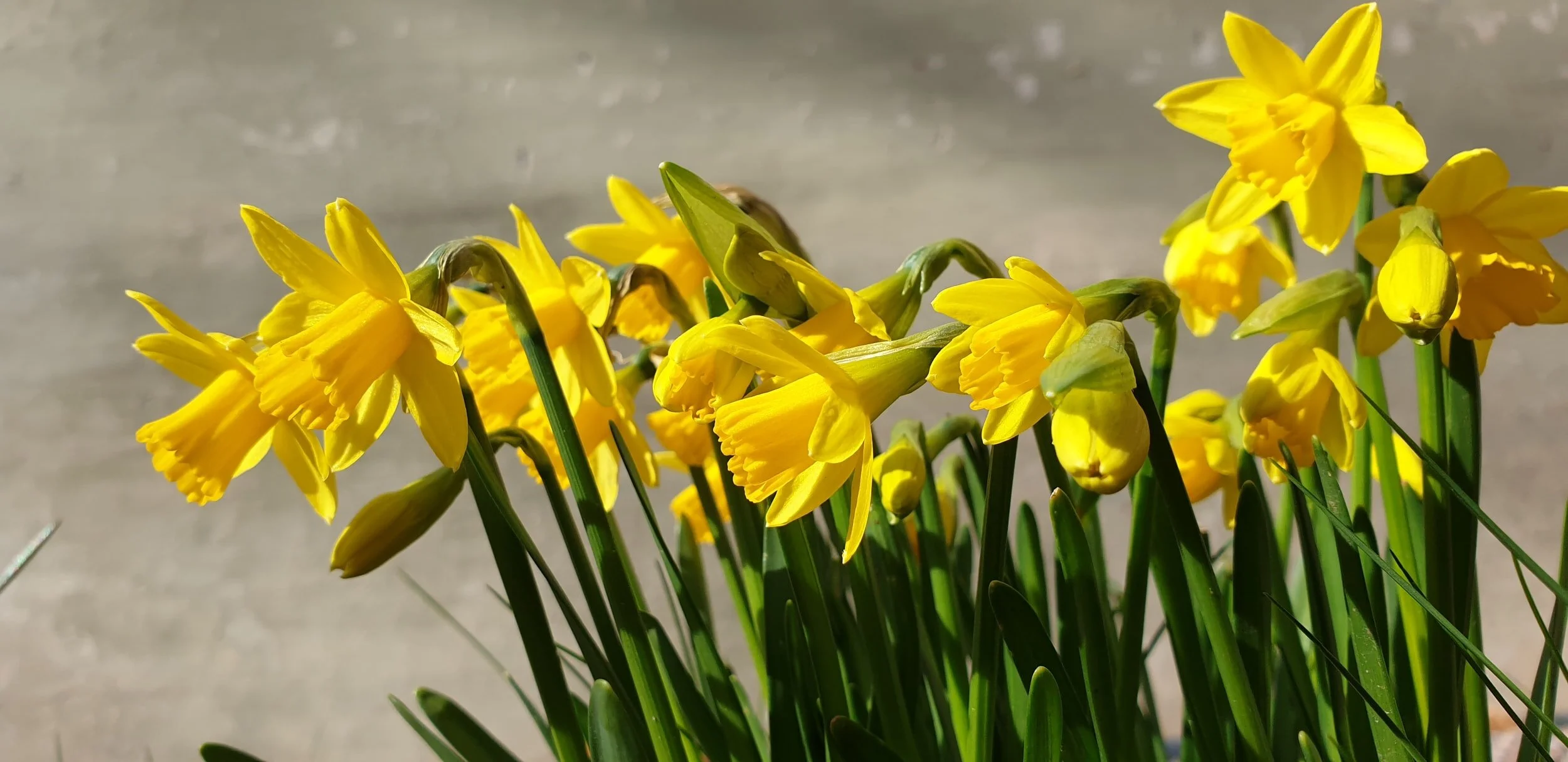
Easter Flowers
If you would like to contribute to a fund for Easter flowers which will decorate our altar and then be delivered to shut-ins, please click here for instructions. Contributions must be received in the office by 9:00am on March 29. Contact the office with questions.

Welcome to Easter Boxing!
Join our modified Easter Egg Hunt!
We are one of the participating churches in a modified Easter Egg hunt sponsored by the Diocese of Massachusetts.
For more information click here. Taryn will notify you when Our Easter Box search begins, but note, it will not be before Easter.
3 Easy Steps
Each church that is participating has hidden an Easter Box on their property. Follow the clues to find the box.
Take a photo of the Easter Egg you find! Leave a message in the log book and take a sticker!
Put everything back for the next "seeker" to find.
The Rev. Eleanor Applewhite Terry
Sermon for 3 Lent B; March 14 2021
Sermon for 4 Lent B; March 14, 2021
Good Shepherd, Acton
May the words of my mouth, and the meditation of all our hearts, be acceptable in your sight, O God, our Strength and our Redeemer. Amen.
The photos on my phone from a year ago capture how quickly things changed. Snapshots from February vacation week show my 80-something parents, my niece, and my three kids and I enjoying a day at a very crowded New England Aquarium in Boston. And the weekend we took my Dad to the New England Boat Show at the Boston Convention Center. We climbed all over the boats, touching handrails, ducking into tight cabins with other guests, breathing air that very well could have contained COVID droplets. We had no idea what was coming and consider ourselves very lucky.
Even my pictures from March 11, 2020 show how little we understood. That’s the day I took off from work to chaperone my daughter’s class trip to the Harvard Natural History museum. We were a little aware of the need to be extra cautious. I brought along some hand sanitizer and some disinfecting wipes for lunch time. But otherwise we roamed the museum freely. I had no idea that after that day off, I would never return to a normal work day at Old North Church again. Within 24 hours, like you here, we made the decision to cancel worship. I remember the Senior Warden arguing passionately that the announcement not say we would be closed “for the foreseeable future” because she considered that too extreme.
March 14- a year ago today, my photos show three of us volunteering at Old North’s outreach program that morning, distributing food to North End seniors. We decided not to invite the guests into the building, as we normally did, but to distribute the bags from the doorway. Within a month two of the guests, residents of a neighborhood senior residence, would be dead from COVID.
That afternoon I sent my husband a text from the Acton Trader Joe’s with a photo of completely empty shelves. “This is getting scary” I wrote.
None of us, perhaps outside of public health experts, could have foreseen the year that would follow. And I suppose it’s good we did not know. I cannot imagine what it would have felt like at the beginning of everything had we been told how long we would have to endure. That it would be six months before our kids would go back to school- and even then only 2 days a week. That over 1/2 million Americans would die- (even now, we are averaging well over a thousand US deaths a day as of this weekend). That, actually, it would be far beyond “the foreseeable future” before church would regather again in person. And those fun day trips with my parents, for which they had moved from their home in CT to enjoy with their grandkids, those would be replaced by grocery drop-offs on their front porch. The toll on our collective mental health, economy, elders and children is especially hard to bear. It has been a very long year for all of us.
So on this one year anniversary of the week everything came to a halt, it is fitting that our Old Testament lesson takes us into the wilderness with Moses and the Israelites. Perhaps we can relate to their plight more honestly than we ever have before, having spent the last year of our own lives in the wilderness of pandemic.
You’ll recall that the Israelites spent forty years wandering, and complaining their way to the Promised Land. Enslaved in Egypt, their ancestors suffered and toiled for four hundred years until Moses led them to freedom. They crossed the Red Sea in triumph, only to wander for another forty years in the dessert wilderness.
God assured them the Promised Land lay ahead, but it would be a long, dangerous, hard journey. It’s likely that few, if any, of those who escaped Egypt would live to see it. Forty years is a long time- can you imagine if our quarantine lasted that long?- and back in those days, with shortened life spans, at least two generations would come and go before they reached the Land of Milk and Honey.
To say, as our Scripture does, “the people became impatient on the way” is a rather big understatement! They murmured and complained constantly. “Why have you brought us up out of Egypt to die in the wilderness? For there is no food and no water, and we detest this miserable food.”
This behavior drives Moses crazy. For 40 years he endures the complaints of his people, who frequently blame him for their hardships. He doubts his own ability to lead such a stiff necked and stubborn people. But God empowers him to continue, so Moses endures their whining and encourages them to maintain their trust in God. But now, they are starting to “speak against God.” It is one thing to speak against Moses, and his brother Aaron, but quite another to speak against God and distrust God’s guidance and promise.
When God sends manna from heaven for them to eat and provides water in the desert for them to drink, they complain and doubt whether God is with them, even though the evidence of God’s care for them is literally falling out of the heavens upon them. And when, in the verses just before today’s passage, God answers their prayer by helping the Israelites defeat a Canaanite army, they fail to offer thanksgiving, and instead speak out against God. So God gets angry. Very angry. God sends snakes. Lots of them! And poisonous ones at that. And they bite the people and many die.
Suddenly there are snakes everywhere, and the people quickly realize their need to repent and they beg Moses to pray to the Lord to take the snakes away. God must have known this would be a good way to get the people to be more faithful. If daily food and water in the desert aren’t enough to remind them to give thanks to God, then poisonous snakes ought to get their attention! God knows our human nature well. How often we neglect to offer thanksgiving when good things happen, but we sure are quick to turn to God when we need help.
Perhaps, particularly so, when snakes are involved, as I know full well. I am terrified of snakes. All snakes. Doesn’t matter what size. What kind. Whether a pet, or a harmless garter snake in my yard, or a lazy sleeping snake behind thick glass in a zoo. They all scare me equally, whether poisonous or not.
Or at least that is what I thought until the night we discovered a rattlesnake coiled up near our campground in the Grand Canyon. I shared about that trip in a sermon a few weeks ago. I neglected to mention The Snake.
Our guides on that trip said the usual, unhelpful things when the rattlesnake was spotted: “Don’t bother it and it won’t bother you.” “It’s more scared of you than you are of it” - Which I doubt. That snake probably saw people every night at that campground and I was encountering my very first wild rattlesnake within an uncomfortably short slither away from where I planned to sleep. When I pointed this out, one of our guides offered this especially reassuring piece of advice: “If you notice a snake in your sleeping bag, just lie still and let it crawl out first.” Needless to say, my fear of harmless garter snakes in no way compares to the terror of being in the presence of a wild, loose rattlesnake.
So I get the fear of the Israelites. I can relate to their desperate plea that the Lord take the serpents away. I’ve been known to pray that prayer myself, under far less dangerous circumstances. And if God ever feels I’m not devoted enough to my prayers, a snake or two will certainly get me praying right away.
Luckily, for the Israelites, God answers their prayer. He hears their confession, their admission of sin, and he commands Moses to make a bronze serpent and put it on a pole so that from then on, “whenever a serpent bit someone, that person would look at the serpent of bronze and live.”
And just like that the very thing they were afraid would kill them, becomes the means to healing and life. Sound familiar? It’s the paradox of our faith. The story of the cross as well. An image of terror and death that becomes the way to new life- for Jesus. And for us.
God takes the objects of our fear and death and turns them into the way to new life. Thus those who look at the serpent of bronze will live. And those who gaze upon the cross of Christ will live eternally.
And perhaps this gives us a way to think about this year of pandemic as well. Because God will never abandon us in our suffering and death. God will never leave us to face our hardships alone. God will not allow our fears to conquer us. And throughout this year of isolation… this year of sickness for so many, and death for too many, God has been in the midst of us.
It’s a bittersweet milestone we are passing this week — a full year into the pandemic. And even though there is much reason to hope that it will all be over soon… there is a lot that has been lost forever. My own emotions have been all over the place this week— I’m delighted by the prospect of a more normal life come summer and encouraged by the increased availability of vaccines. Yet, I am exhausted when I consider all we have endured, the burdens we have carried, and the challenges which lie ahead.
I have always appreciated the stories of the Israelites in the wilderness. -Maybe not the part about the snakes so much- but it feels very real to me that God’s chosen people grumble and complain, get lost, and can be both incredibly faithful and hopeful and also distrustful and unfaithful. They slog along toward the Promised Land. It takes a very long time. It is hard. It is not always fun. There are snakes along the way— the really scary kind. And yet they persevere because that’s the stuff of which we are made. We are people who live by God’s promise. Who try our best to be faithful, and succeed sometimes, but fail along the way too.
We wander. We complain. We try and fail and try again.
And God never leaves us.
Not Ever.
And that’s a message that I am grateful to hear right about now. -A year into the pandemic. When we are worn out from wandering. And hopeful, but still a little fearful too. We’re getting tired of the manna of this wilderness and are ready for some fun again, but we are not at the end of our journey just yet.
And that’s ok. Because God will see us through to the end. As God has always done. And God will always do. Helping us face all that scares us so that we, too, may live.
Thanks be to God. Amen.
The March 2021 Issue of the Shepherd's Staff
Read the latest issue of the Shepherd’s Staff